Three Personas That Cut Features From Shieldly
I don't have a research team. I built three personas as a filter and stopped building for an imaginary power user. One of them killed iPad support.
I Was Building for Someone Who Doesn't Exist
Shieldly keeps track of warranties and receipts. You scan a receipt, it pulls the date and the store, pings you before the warranty runs out, and when something breaks it helps you file a claim.
For the first few weeks I kept adding things nobody asked for. Filters. Tags. CSV export. iPad support. Each one sounded reasonable on its own. Together they made a Swiss army knife I couldn't describe in one sentence.
I was building for an imaginary power user. Someone with 200 warranties, tagging them by color. That person doesn't exist, and I was giving them half my time.
A persona as a filter
I don't have a research team or a budget for interviews. So personas aren't a poster with a stock photo. They're one question: would any of these people actually use this.
I built three. Not from surveys, from why anyone opens an app like this at all. A warranty keeper gets opened rarely. It's not an app you live in.
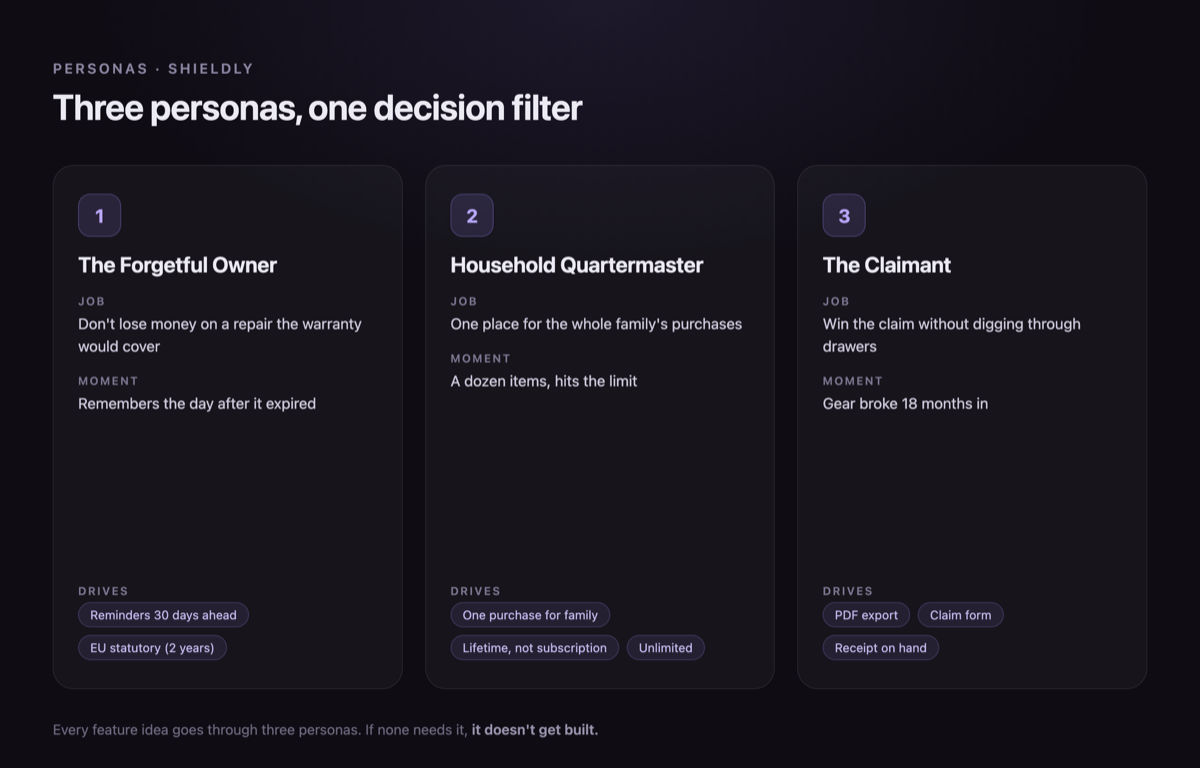
| Persona | Job | Drives |
|---|---|---|
| The Forgetful Owner | Don't lose money on a warranty-covered repair | Reminders, EU statutory warranty |
| Household Quartermaster | One place for the whole family's purchases | Family sharing, lifetime, unlimited |
| The Claimant | Win the claim without hunting for the receipt | PDF export, claim form |
1. The Forgetful Owner
Bought an expensive washing machine and a laptop. The receipt went into a drawer or an inbox where it's gone for good. Remembers the warranty the day after it expired.
This persona doesn't want to manage a collection. They want the app to reach out first. So the first screen isn't an empty list with instructions, it's one button.
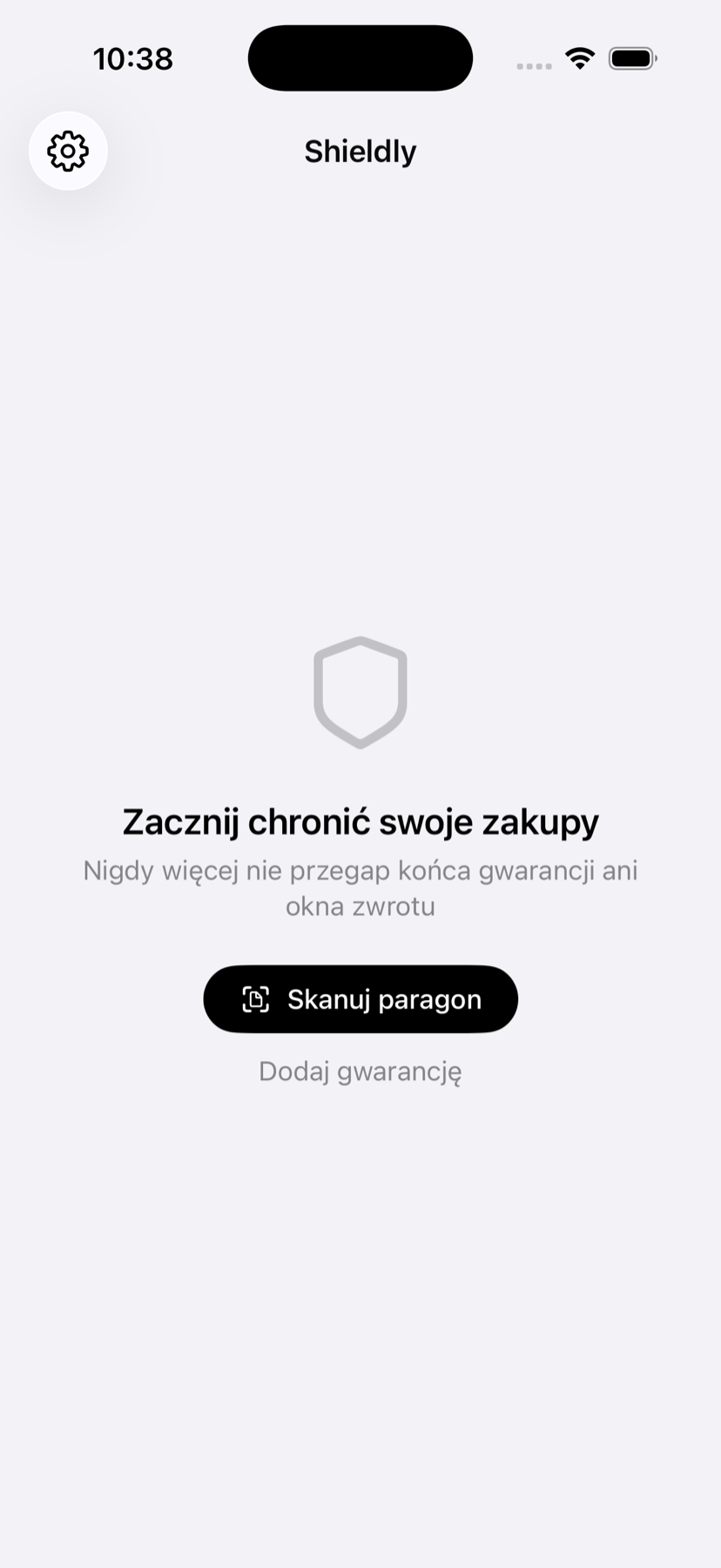
Then there's statutory warranty. In the EU you get two years by law, separate from the manufacturer's. Almost nobody remembers it. Shieldly shows that date next to the warranty, because it's real money the forgetful owner would never claim on their own.
2. The Household Quartermaster
Every family has one person who handles the buying. Appliances, the kid's bike, tires, the partner's laptop. A dozen items pile up fast.
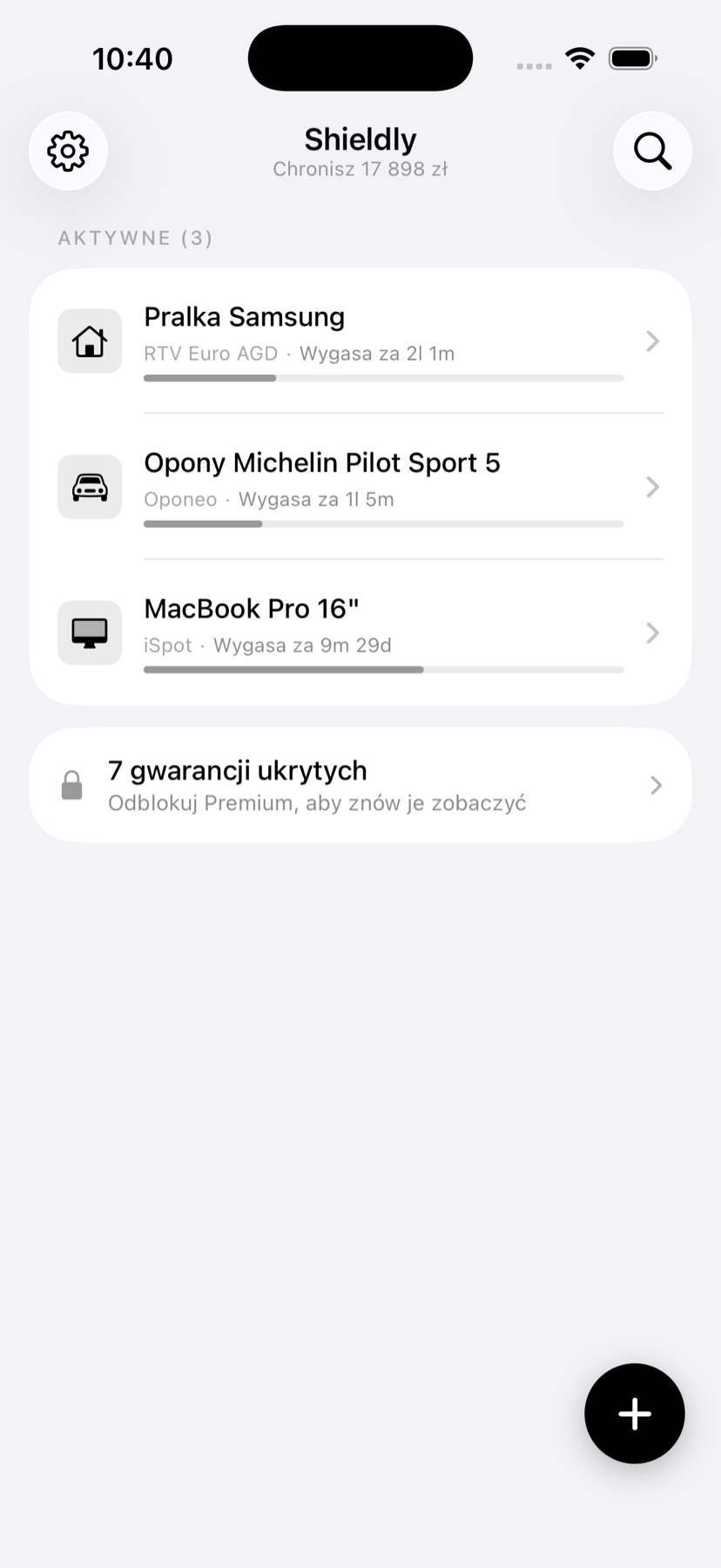
This is who hits the limit. Free shows three warranties, the rest are locked. I don't bury that in a menu, I put it on the main screen.
The quartermaster won't pay a subscription to store their own receipts. So Premium is a one-time purchase, not a subscription. And one of its features is a single purchase for the whole family.
3. The Claimant
Rare persona, critical moment. Something broke 18 months in, and a claim has to go out. They need the receipt, the purchase date, and a letter that holds up.
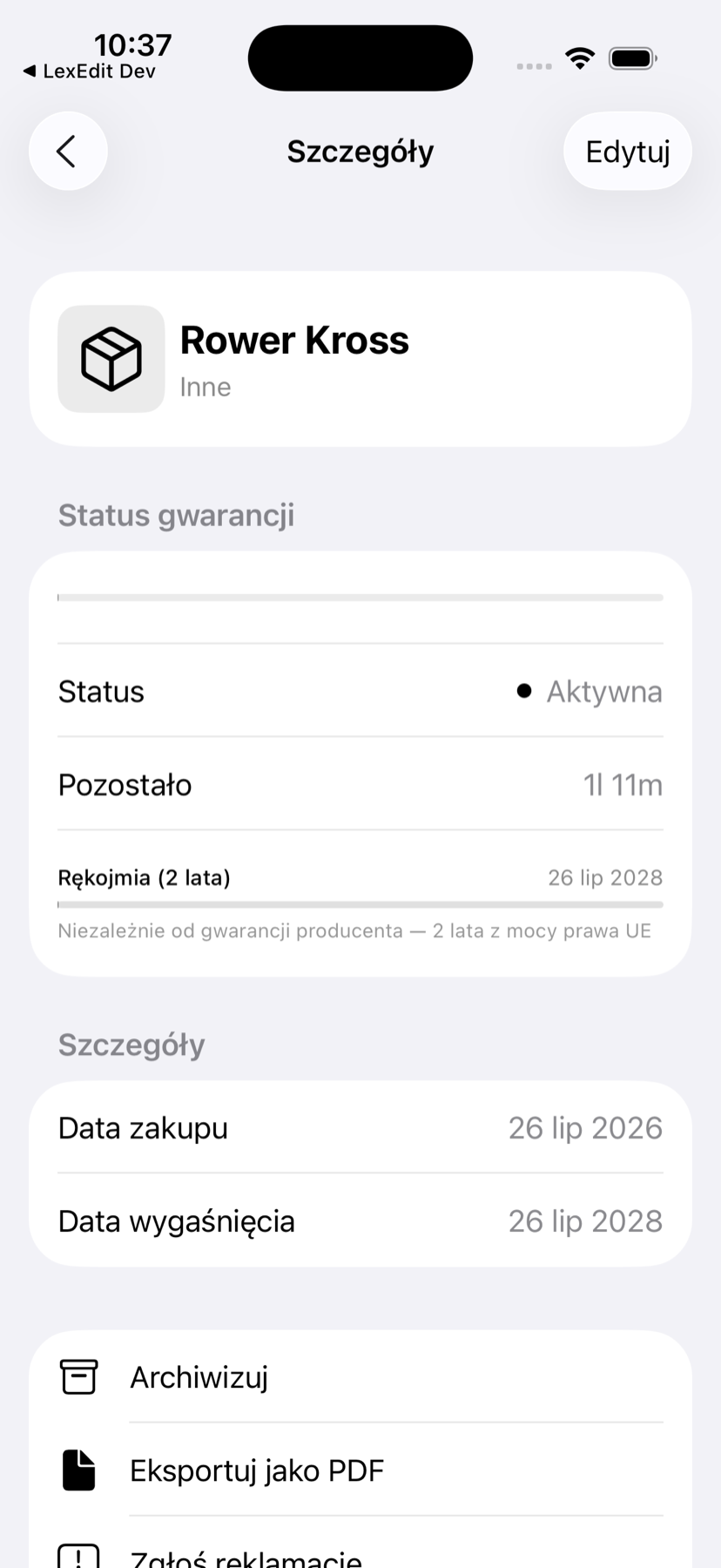
I built the detail screen so everything a claim needs sits in one place: status, dates, the receipt as a photo, PDF export, a ready form.
This is the moment someone just got their money back because of the app. The only sensible time to ask for a review. Not after the third launch.
What the personas cut
A persona is only good once it kills something.
iPad got cut. Think about when you use this app. You're in a store or at home, a paper receipt in one hand and a phone in the other. Nobody reaches for an iPad to photograph a receipt. iPad support was a cost with no persona behind it. Gone.
AI behind Premium. Scanning that auto-fills the fields from a receipt costs me real money per call. The question isn't "should I add AI", it's "who pays for it". The forgetful owner adds two things a year and is fine typing them. The quartermaster with a dozen items saves time. So AI lives in Premium.
Lifetime instead of a subscription. The quartermaster buys once and wants to forget about it. A monthly fee to store receipts is a no in two seconds. The whole paywall rests on that one sentence.
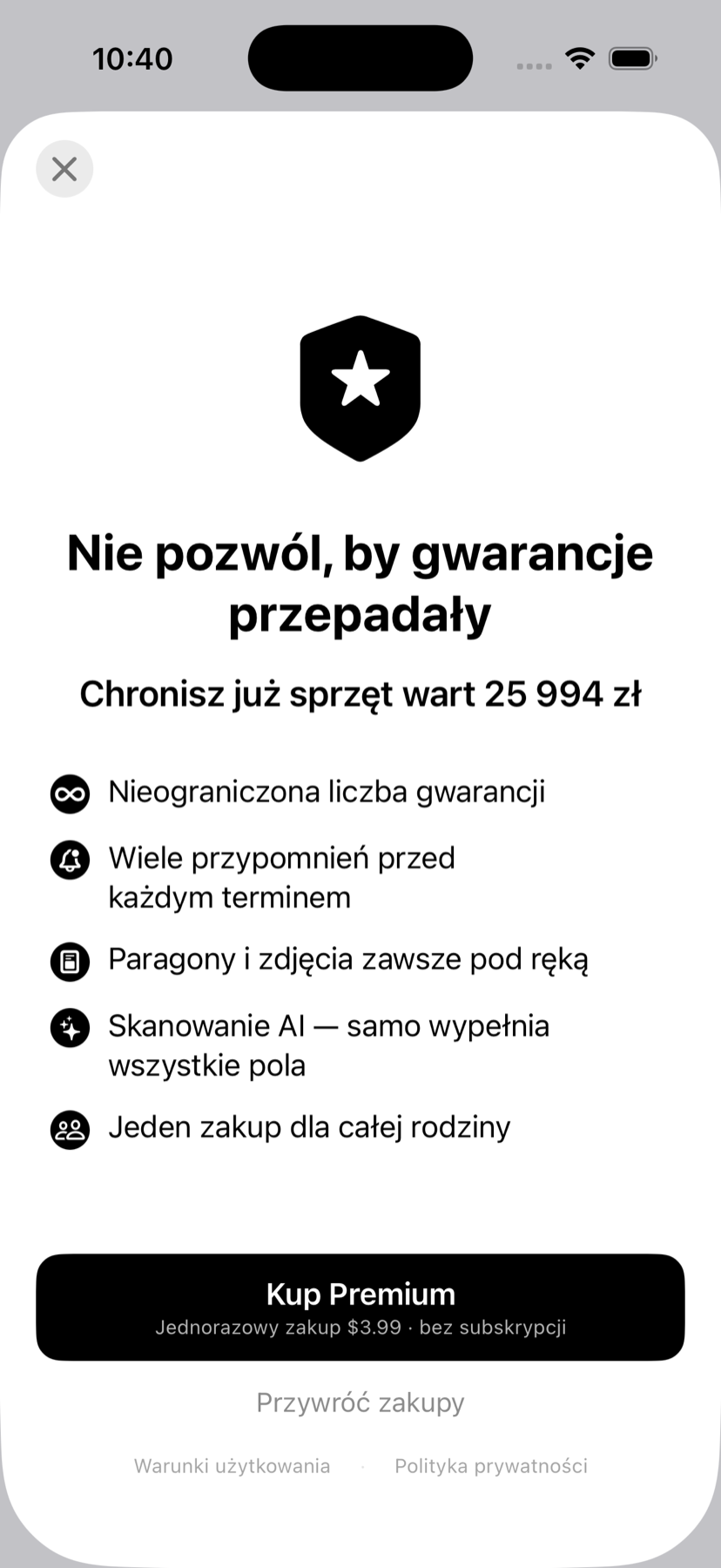
The paywall doesn't sell features in the abstract. It sells them to specific personas: unlimited for the quartermaster, reminders for the forgetful one, AI for the heavy user, one purchase for the family.
Where this can break
Personas can turn into fiction you start believing yourself. Three made-up people are still zero data. I treat them as hypotheses. Analytics and reviews check them, not my imagination.
The three-item limit is a bet. Too high and the quartermaster never needs Premium. Too low and the forgetful owner bounces before seeing the point. You tune that number with data, not gut.
A persona helps you cut. It won't write the code or decide whether statutory warranty should be on by default. It's a tool for thinking, not a replacement for it.
Three made-up people saved me weeks on features nobody would have touched. Not because they knew better. Because every time I wanted to add something, I had to point at which of them wanted it. Usually none of them did.